They are sent to work, to herd, to fetch water, or to take on paid labour that supplements the household's income. Girls are
married off, in part because a married daughter is one fewer mouth to feed. Boys are drawn into casual labour, or into activities
that put them at risk. The decision is rarely made against education. It is made against hunger. A family that cannot put food on
the table will make the choices that put food on the table, even when those choices cost a child her schooling. Economic stability
at the household and community level is therefore not separate from the work of keeping children in school. It is one of the
conditions that makes it possible.
We support community-based projects that generate income and strengthen local livelihoods. The projects are designed and run by
the communities themselves. This is deliberate. A project that is designed in an office and delivered to a community is a project
that the community may use while it lasts and abandon when it ends. A project that is designed by the community, with the
community's own priorities and capacities at its centre, is a project that the community has a reason to sustain. Our role is to
support these projects with resources, technical assistance, and connection to markets and services. The ownership belongs to the
community.
The purpose of this work, from the perspective of a child, is that the household the child belongs to is not under so much
pressure that the child has to be withdrawn from school. A family that can meet its basic needs is a family that can afford to
keep a child in school. A family that has some margin is a family that can absorb a bad season without making a decision that
costs a child her education. A community that has economic activity is a community that offers its members a reason to stay and
build a future. The work of community-based economic projects is not separate from the work of keeping children in school. It is
one of the conditions on which that work depends.
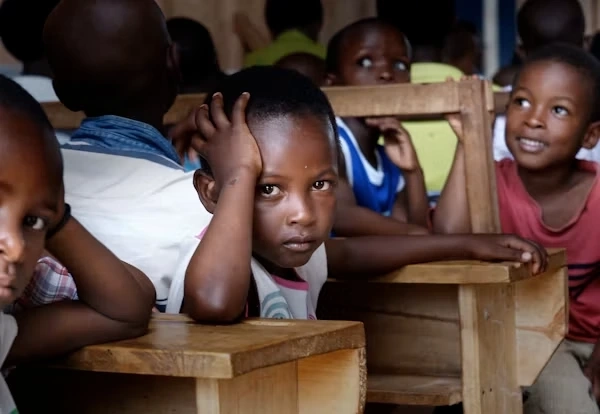
Community-based economic projects are designed and run by the communities themselves. When households have enough stability to
meet their basic needs, they are able to keep their children in school.